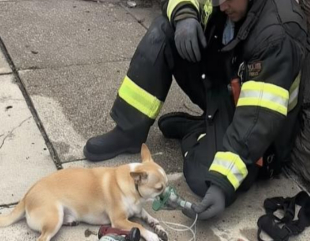
The flames were merciless, crackling through beams, swallowing walls, sending thick plumes of smoke curling into the night sky. Firefighters worked in steady rhythm, containing what they could, but one order hung over the scene like an iron gate:
No one goes inside. The structure was deemed too unstable, too dangerous. Entering was a death sentence.
And then came the cry.
“My dog—please, my dog is inside!” a man’s voice broke through the noise, cracking with desperation. His hands trembled as he pointed toward the inferno. “He’s just a little one. Please… please save him.”

For most, the order was absolute. No firefighter would be blamed for obeying the command to stay out. But for one man in turnout gear, standing on the edge of the chaos, something in that plea struck deeper than duty.
He didn’t pause. He didn’t ask permission. He simply moved.
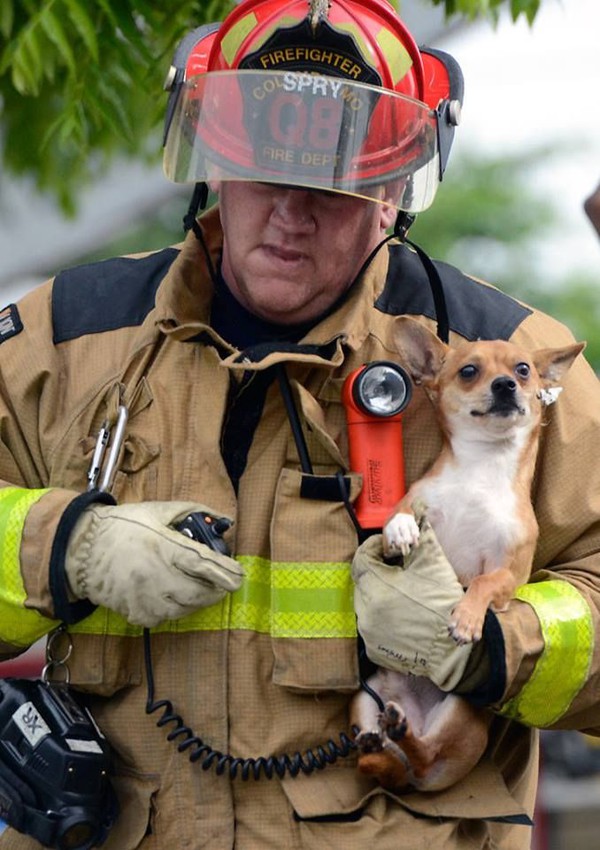
Through the suffocating smoke, he pushed past the collapsing doorway, heat pressing against his skin even beneath layers of gear. His flashlight cut faint beams through the haze, searching, straining. Then, under a table, he spotted the tiniest figure — a chihuahua, curled in terror, trembling but alive.
The building groaned. Joists cracked. The air filled with the low roar of imminent collapse. Time had run out.
In one swift motion, the firefighter scooped the little dog into his arms. He turned, shielded the fragile body against his chest, and fought his way back through the smoke. The world shrieked and buckled behind him, flames biting at his heels.
When he emerged into the open night, the crowd erupted. Cheers rose like a wave, colliding with the sobs of the chihuahua’s owner, who rushed forward with arms outstretched. The tiny dog whimpered, then wagged its tail weakly as it was returned to trembling hands. For the man who thought he had lost his closest companion, relief came in torrents of tears.
The firefighter stood aside, breath ragged, adrenaline fading, helmet heavy with soot. Around him, the scene blurred into chaos again — water spraying, orders shouted, walls collapsing. But in his mind, there was only the image of that small dog alive in his arms.
Later, when the fire was out and silence replaced sirens, reality set in. He knew the consequences. Disobeying a direct order was not something his department would overlook. His career, the job he had trained for, sacrificed for, and loved, might well be over.
And yet, he felt no regret.
Rules save lives, yes. Orders keep chaos from spiraling into tragedy. But sometimes, in the split-second between command and choice, a heart makes its own decision. For him, saving that small, frightened creature mattered more than protocol.
“It was a life,” he would later say softly. “And in that moment, it was the only thing that counted.”
The story quickly spread, carried by neighbors who had witnessed the daring rescue. Some hailed him as a hero who followed the call of compassion above all else. Others questioned the risk — was it worth it, risking a human life for a dog? But those debates faded in the face of one undeniable truth: a tiny chihuahua lived because one man chose not to walk away.
For the owner, there is no debate. His dog is family, his only companion through long, lonely nights. Without that firefighter, the little chihuahua would have been another victim of the flames. Instead, the two were reunited, bound now not only by love but by gratitude.
And for the firefighter, though the cost may be high, the memory of that rescue will remain. A reminder that heroism is not always about medals or accolades, but about listening to the cry that no one else answers — and stepping into the fire anyway.
Because sometimes, the greatest acts of courage are measured not in lives counted, but in lives that still count.
Leave a Reply